

Generate Documentation
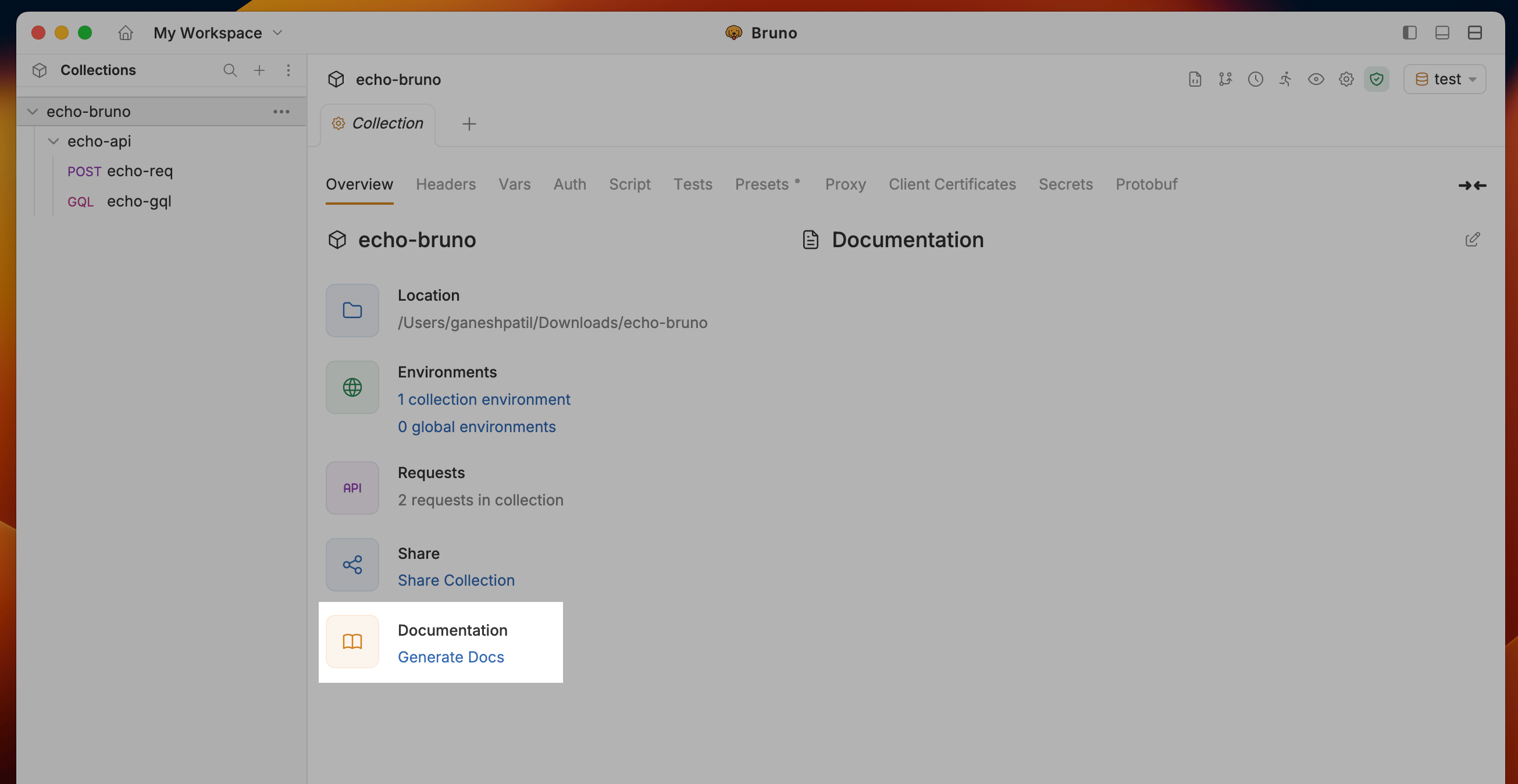
- Navigate to the Collection Settings and click on the Generate Docs under Documentation section
-
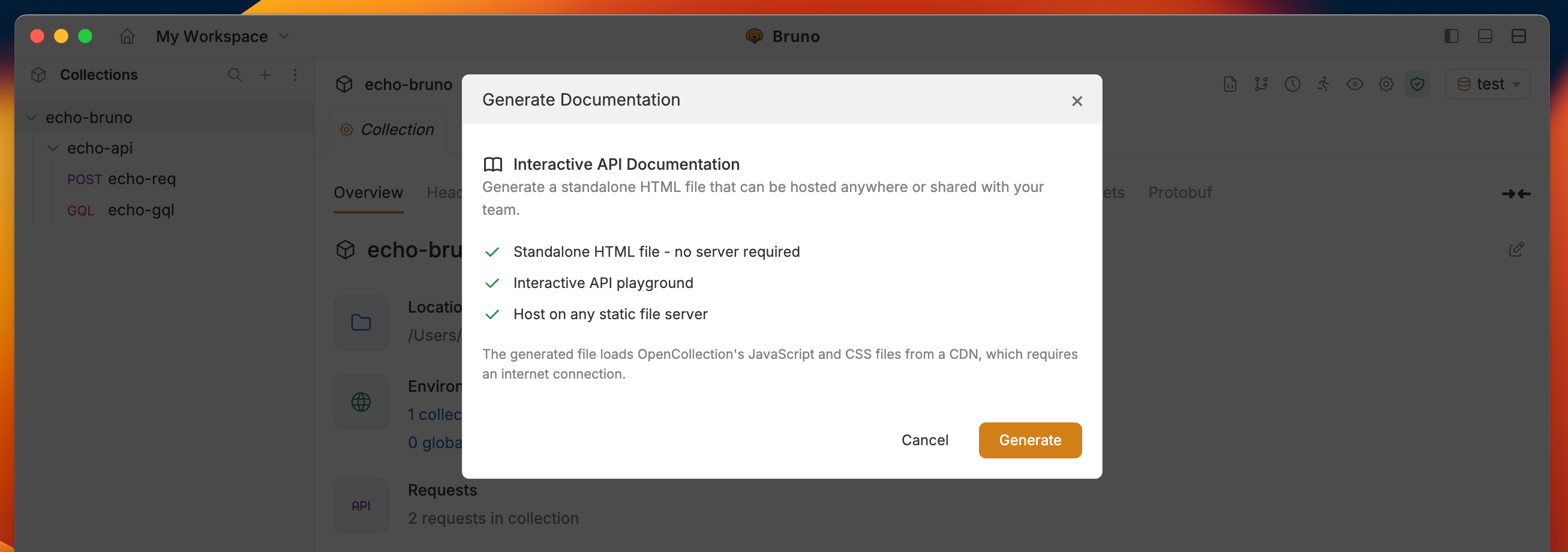
Choose which environments to include in the generated docs. By default all environments in the collection are selected; use the Select All checkbox or the per-environment checkboxes to scope the output (for example, to keep
localorstagingenvs out of docs shared externally). The configuration card alongside the list shows the normalized collection version and the number of folders and requests that will be exported. - Click the Generate button to create the HTML documentation
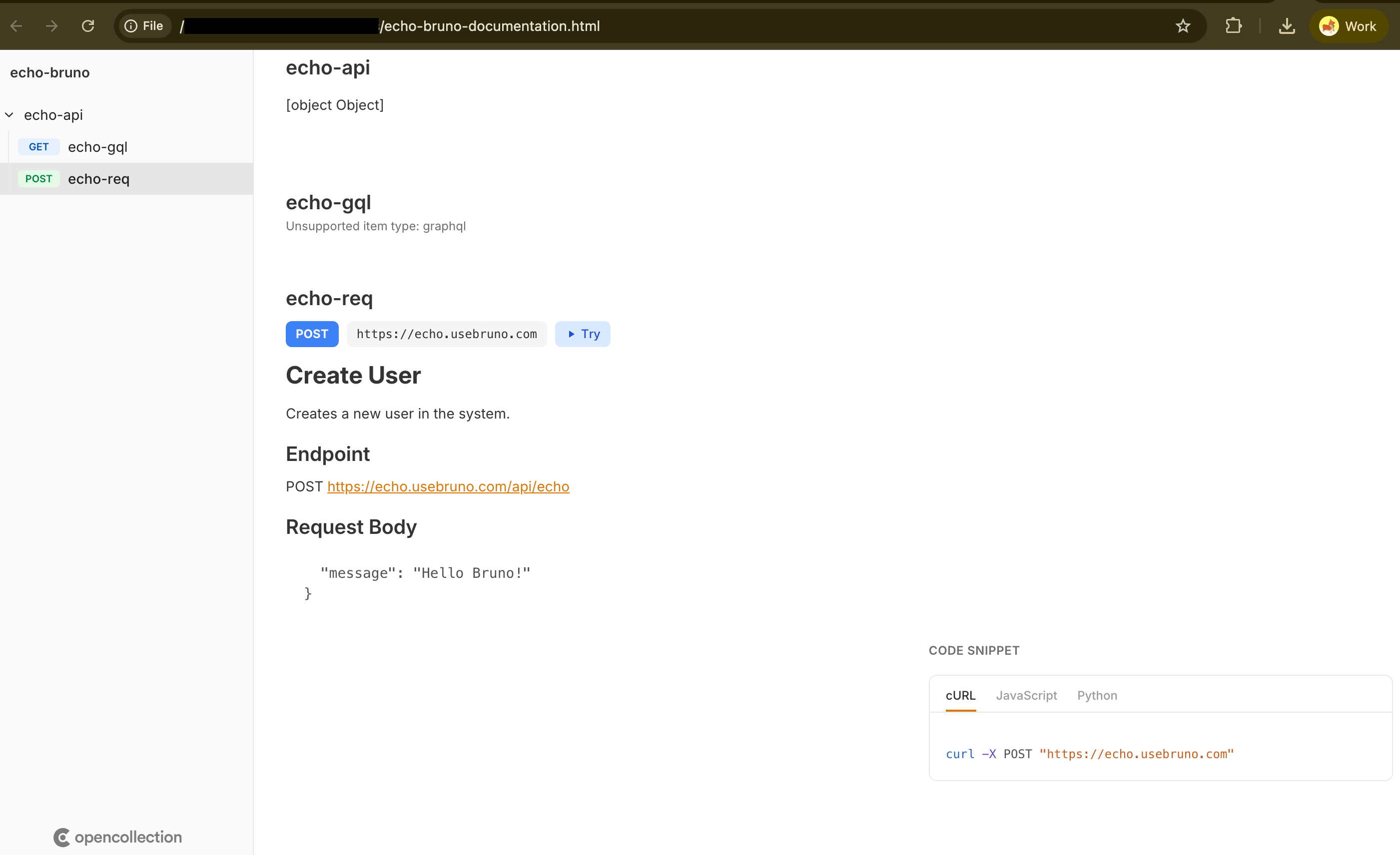
- Bruno will generate a HTML documentation file for your collection documentation
Key Features
Auto-Generated Docs from Bruno Collections
- Support for .bru files and Bruno collection structure
- Render nested folders with requests, environment variables, and metadata
- Sample requests/responses and script previews included
- Environment support for different configurations
Code Samples
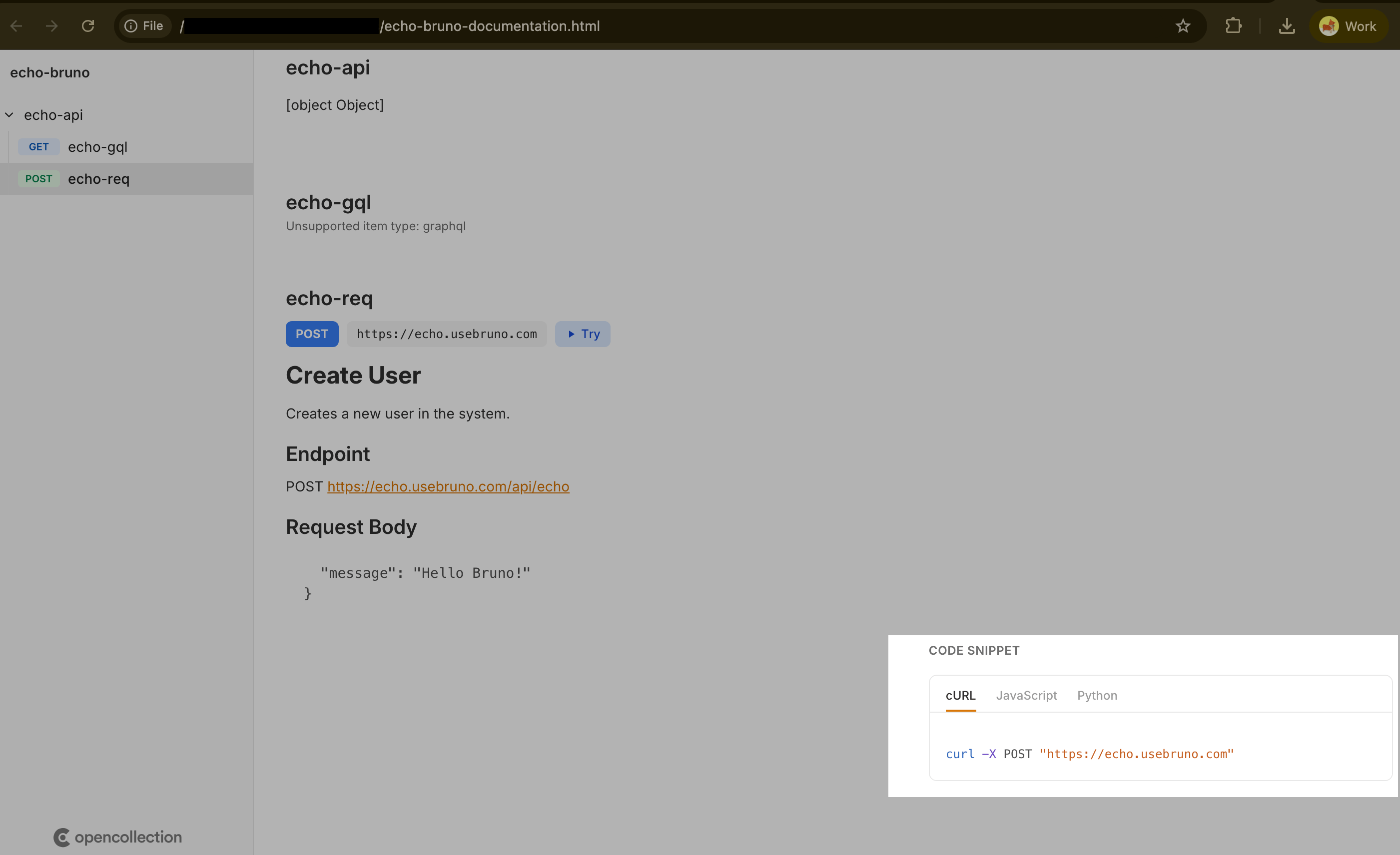
The documentation automatically generates code snippets for each request in multiple languages:- cURL
- Python (requests)
- JavaScript
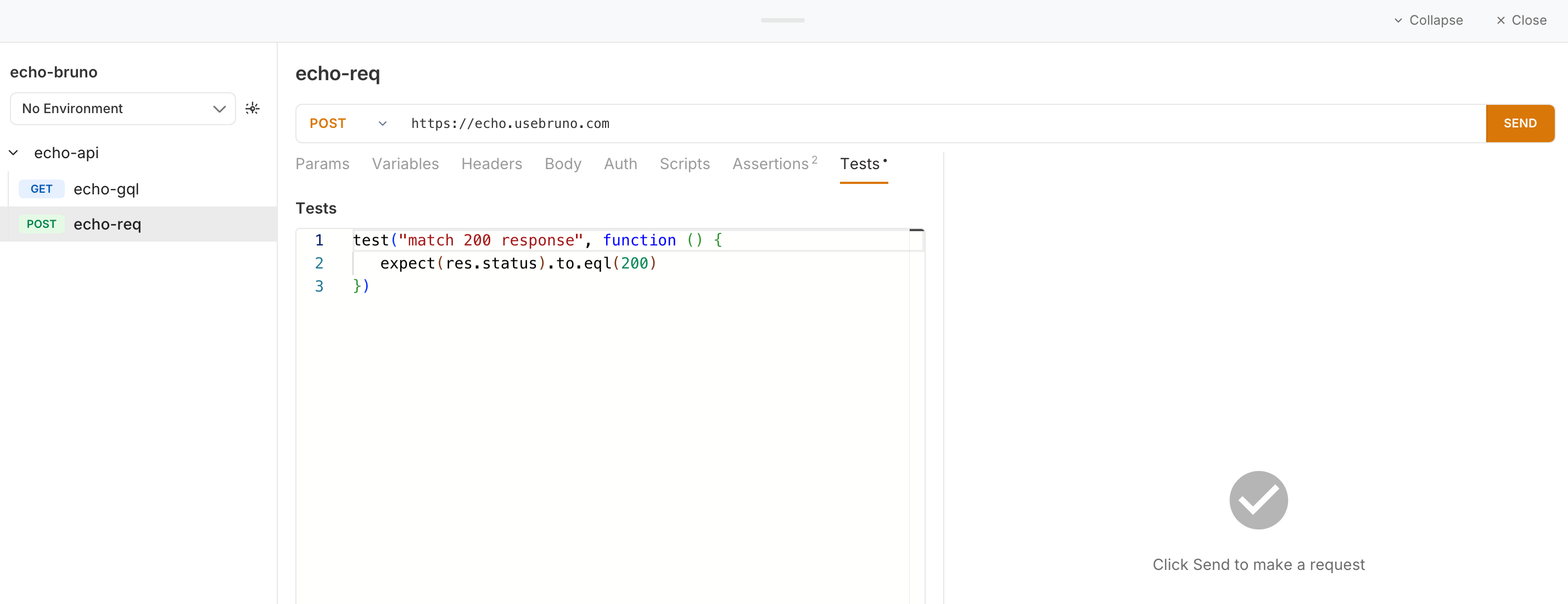
Tests and Scripts Display
- Show pre-request scripts inline for each request
- Display post-response scripts and test logic
- View test assertions directly in the documentation
Try It Out Playground
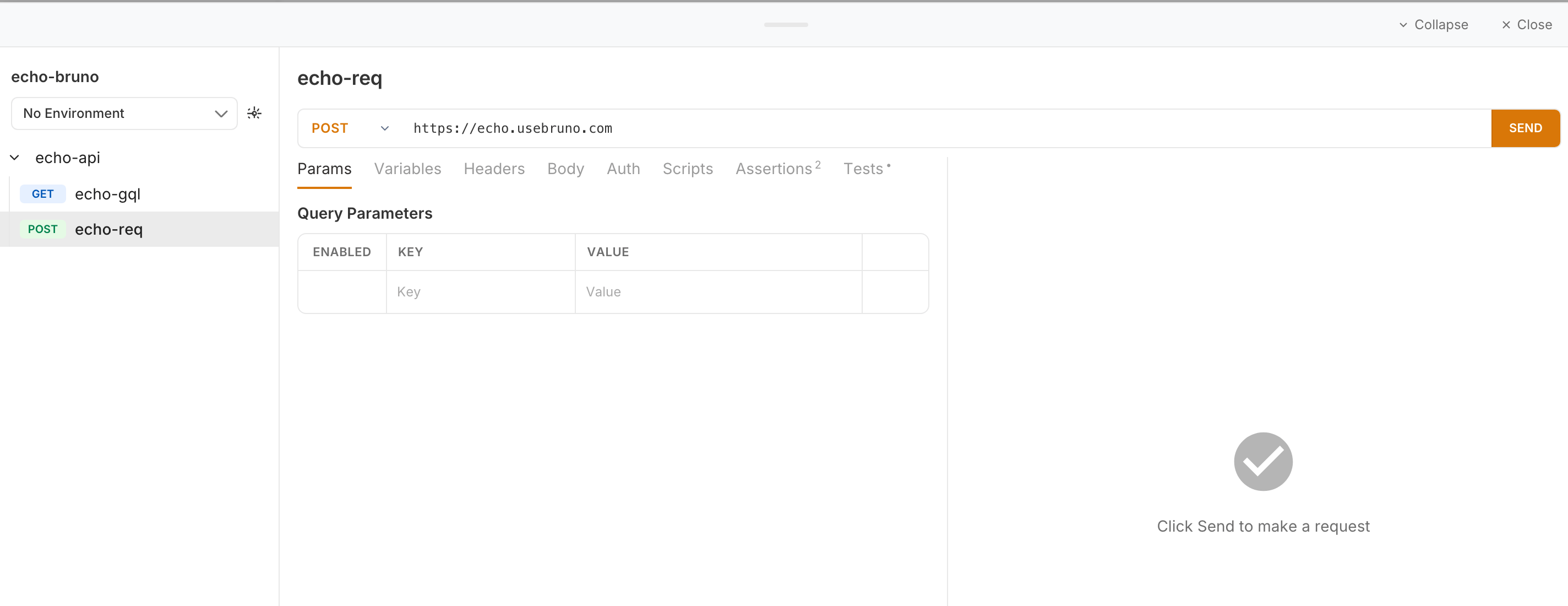
Interactive playground that allows users to:- Edit request parameters, headers, and body
- Modify and test scripts in real-time
- Execute requests live directly from the documentation
- View responses immediately
Deployment Options
Once generated, you can:- Open locally: View the HTML file in any browser
- Static hosting: Deploy to GitHub Pages, Netlify, Vercel, or any static host
- Share directly: Send the HTML file to team members or API consumers
- Documentation portal: Add to your developer portal or docs site